(+91) 9595750750


If you're planning a career in the pharmaceutical, biotechnology, or healthcare industry, you’ve likely come across two important fields: Regulatory Affairs (RA) and Quality Assurance (QA). While both play critical roles in ensuring product safety and compliance, they differ significantly in responsibilities, skill sets, and career paths.
Choosing between them can feel confusing—but understanding their core differences can help you make a confident decision.
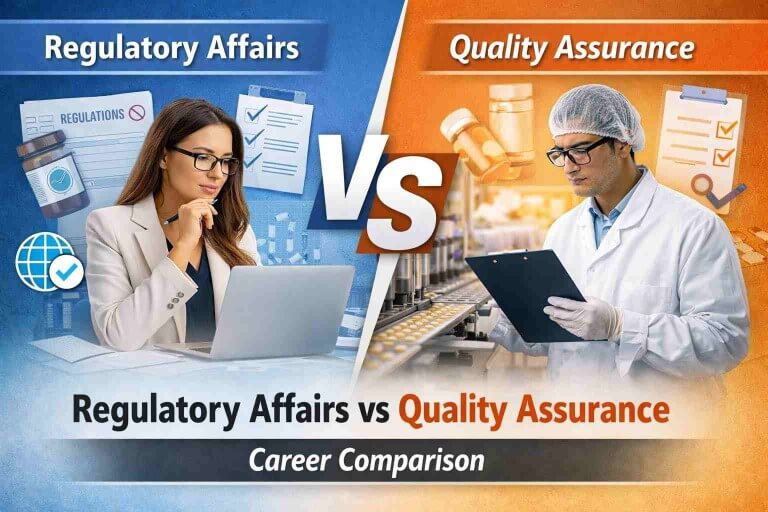
What is Regulatory Affairs?
Regulatory Affairs professionals act as the bridge between pharmaceutical companies and regulatory authorities like the FDA, EMA, or CDSCO. Their main job is to ensure that products comply with all laws and regulations before they reach the market.
They handle:
1. Drug approval submissions
2. Regulatory documentation (dossiers)
3. Communication with health authorities
4. Keeping up with changing regulations
In short, they ensure that a product gets approved and stays compliant throughout its lifecycle.
A Regulatory Affairs certification Course can help you understand global regulations, submission processes, and documentation requirements in depth..
What is Quality Assurance?
Quality Assurance focuses on maintaining the quality and safety of products during manufacturing and distribution. QA professionals ensure that processes are followed correctly and consistently.
Their key responsibilities include:
1. Monitoring production processes
2. Conducting audits and inspections
3. Ensuring compliance with GMP (Good Manufacturing Practices)
4. Handling deviations and corrective actions
Simply put, QA ensures that what is produced meets the required quality standards every time.
A Quality Assurance certification helps build expertise in quality systems, audits, documentation, and compliance practices.
Key Differences Between Regulatory Affairs and Quality Assurance
1. Focus Area
Regulatory Affairs: External focus—dealing with government agencies and approvals
Quality Assurance: Internal focus—ensuring processes and product quality within the company
2. Role in Product Lifecycle
RA: Involved from product development to approval and post-market compliance
QA: Active during manufacturing, testing, and distribution stages
3. Documentation
RA: Prepares regulatory submissions and approval documents
QA: Maintains SOPs, batch records, and quality documentation
4. Skill Set
RA Skills:
Regulatory knowledge
Documentation expertise
Analytical thinking
Communication with authorities
QA Skills:
Attention to detail
Process management
Problem-solving
Audit handling
Career Opportunities and Growth
Regulatory Affairs Career Path
1. Regulatory Affairs Executive
2. Regulatory Affairs Associate
3. Dossier Specialist
4. Regulatory Manager
RA professionals are in high demand globally, especially as regulations become stricter. This field offers international exposure and opportunities to work with global markets.
Quality Assurance Career Path
1. QA Executive
2. QA Officer
3. Quality Manager
4. Compliance Specialist
QA roles are essential in every pharmaceutical company, making it a stable and consistent career option.
Salary Comparison
While salaries vary depending on experience and location, here’s a general idea:
Entry-Level RA: Moderate salary, increases significantly with experience
Entry-Level QA: Slightly lower or similar starting salary
However, Regulatory Affairs often offers higher long-term earning potential due to its strategic importance and global scope.
Which One Should You Choose?
Choosing between RA and QA depends on your interests and strengths.
Choose Regulatory Affairs if you:
1. Enjoy research and documentation
2. Like working with global regulations
3. Want international career opportunities
4. Prefer strategic and communication-based roles
Choose Quality Assurance if you:
1. Are detail-oriented
2. Like working in manufacturing environments
3. Enjoy process improvement and audits
4. Prefer hands-on operational roles
Both careers are rewarding—it’s about where your passion lies.
Why Certifications Matter
In today’s competitive job market, having the right certification can give you a strong edge.
1. A Regulatory Affairs certification Course helps you understand global submission standards, regulatory frameworks, and compliance strategies.
2. A Quality Assurance certification builds your expertise in GMP, audits, quality systems, and process validation.
Employers value candidates who have practical knowledge along with theoretical understanding—certifications bridge that gap.
Future Scope of Both Fields
In addition to basic certification, GIRA also offers advanced modules that focus on specialized areas such as:
The pharmaceutical and healthcare industries are growing rapidly, especially after the global focus on healthcare innovation.
1. Regulatory Affairs is evolving with digital submissions, global harmonization, and stricter compliance rules.
2. Quality Assurance is advancing with automation, AI-driven quality checks, and stricter manufacturing standards.
Both fields offer long-term stability, growth, and global opportunities.
Final Thoughts
There is no “better” option between Regulatory Affairs and Quality Assurance—only what suits you best. If you’re someone who enjoys working with rules, documentation, and global compliance, Regulatory Affairs might be your calling. If you prefer ensuring quality, maintaining standards, and improving processes, Quality Assurance is a great choice.
Start Your Career with the Right Guidance
If you're ready to build a successful career in either of these fields, Global Institute of Regulatory Affairs (GIRA) offers industry-focused training programs designed to help you succeed.
With expert faculty, practical exposure, and flexible learning options, GIRA provides both Regulatory Affairs certification Course and Quality Assurance certification programs tailored to current industry needs.